Honda Oil Change Services in Victoria, TX

Steady Driving Starts With Oil Change Service
A pickup that idles beside a lease site all morning and then rattles home over caliche can show a modest odometer reading while its oil has put in a long, hard shift. Bravo Honda in Victoria, TX changes oil on all makes and models, and the work begins with diagnosis, not with the drain pan. Before anything comes out, a technician reads the dipstick, notes the color and smell of the oil and looks along the engine for fresh seepage. Your advisor also asks how the vehicle earns its keep, whether that means hours of idling, a loaded bed or a trailer on the highway. Those answers decide which oil goes in and what the technician watches for while the vehicle is raised.
Under the Surface of Your Engine Oil
An idling engine piles up wear the odometer never records. A truck left running to keep the cab cool for a crew between jobs turns its crankshaft for hours while covering no distance, and the oil keeps collecting fuel, moisture and soot the whole time. Many fleets track engine hours for this reason, since miles alone make a hard-working vehicle look lightly used.
Dust is the other hard part of the job. Fine caliche and road grit that slip past a tired air filter or a loose intake clamp end up in the oil, where they act like a polishing compound on bearings, cylinder walls and cam lobes. The oil filter traps much of it, but a filter packed with grit can reach the point where its internal relief valve opens and sends oil around the media.
- Long idle periods keep the oil cooler than highway driving does, so water and unburned fuel stay in the crankcase longer and thin it out.
- Hauling a loaded bed or towing a stock trailer raises oil temperature, and hot oil oxidizes and thickens faster as its additives wear down.
- Caliche roads coat the underside of an engine in pale dust, which sticks to any seep and makes a leak easier to spot on a lift.
- Ranch chores that stop and restart the engine all day, from the feed barn to the water trough and back, add cold starts a highway commute never sees.
- Oilfield service trucks often cover long highway stretches at steady load and then sit at idle on site, a mix that is hard on oil from both directions.
Owner's guides from most automakers describe severe operating conditions, and towing, long idling and dusty roads usually appear on that list. A vehicle that matches those conditions often needs its oil changed sooner, and the technician can point to the page in your guide that covers it.
An engine sitting at idle is often treated as an engine at rest. Idle is actually a poor place for oil, since low pressure, modest heat and slow-moving oil let fuel and condensation build up while the odometer stands still. A work truck showing few miles since its last service may have spent many of those hours idling, and its oil can be more worn than the number on the windshield sticker suggests.
Where Oil Trouble Starts
A dipstick reading taken at the fuel island, once the engine has rested a short while, is the cheapest early warning a working vehicle has. Truck stops and ranch yards are rarely flat, though, and a dipstick pulled with the nose pointed uphill can look full or low when it is neither, so a level patch of pavement gives the honest number.
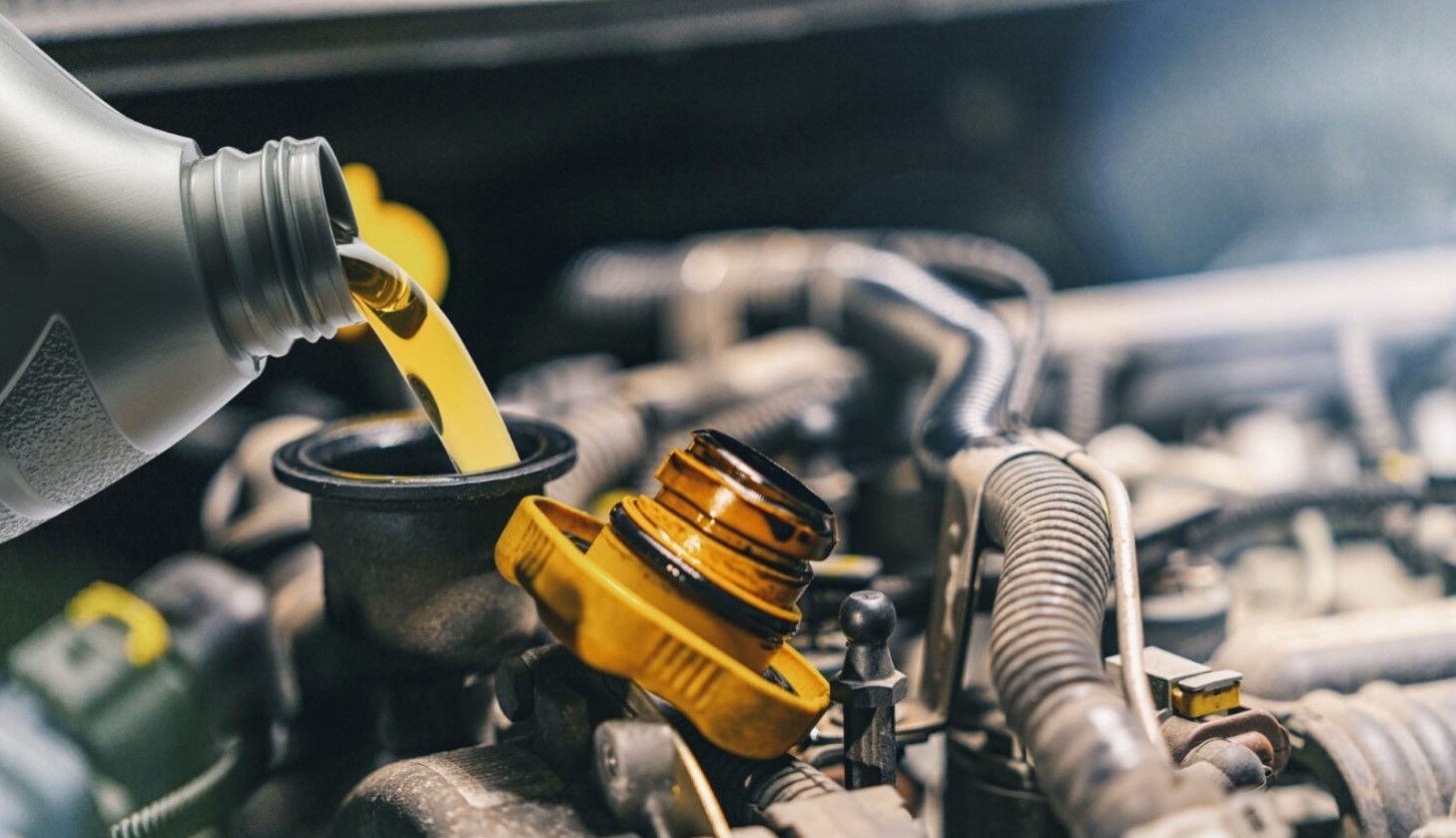
Topping off is where good intentions go wrong. The oil added should match the viscosity grade and the industry approval named in the owner's guide, and many engines print the grade right on the filler cap. A bottle grabbed from the feed store shelf beats running low, but it should be the same grade, and oil sitting above the full mark gets churned by the crankshaft and can froth.
- A hot, acrid smell through the vents after a highway run, often strongest right after the truck stops.
- Thin wisps of smoke rising from the back of the engine bay while the vehicle sits at a stoplight.
- A dipstick level that drops noticeably between services with no spot on the ground below.
- Oil-darkened dust caked along the valve cover edge, the oil pan seam or the filter housing.
- Small dark patches on the gravel where the truck parks overnight, even ones the dust soaks up quickly.
A burning smell and a falling oil level are different complaints, even though owners often lump them together. Oil weeping from a gasket can cook on the exhaust and smell alarming while the level hardly changes, whereas an engine consuming oil drops its level steadily and may leave a blue haze at the tailpipe. Telling the two apart is a matter of evidence: a wet trail on the engine points one way, and a level log kept between services points the other.
Mentioning a smell or a falling level at the first sign lets the technician catch a seep while it is still a gasket job. Oil left to soak the rubber hoses and wiring below a leak shortens their life too, and a gasket that weeps a little now usually weeps more as the heat cycles add up.
Three Kinds of Oil Visits
The oil services below differ by how hard the engine works and what the dipstick has shown lately.
Severe-Duty Oil and Filter Service
Vehicles that idle for hours, tow or live on gravel get oil and a filter matched to the grade and approval the engine maker lists. The technician drains the oil warm and checks it for grit, fuel odor and a milky tint before it goes to recycling. The drain plug gets a fresh sealing washer where the design uses one, and the level is read once more after a short warm-up and a rest. The engine air filter gets a look as well, since a dusty element feeds grit straight to the oil.
Hot Oil Smell and Gasket Seep Tracing
When a burning smell follows a highway run, the engine is degreased and warmed so fresh oil can be followed from its gasket down to the exhaust. Cover edges, the oil filter housing, the oil pan seam and the drain plug are all examined, and a fluorescent dye with an ultraviolet lamp can reveal a source that stays hidden. You hear which gasket is weeping and what resealing it involves before any repair is quoted. If the trail turns out to belong to another fluid, the advisor says so plainly.
Top-Off Oil Match and Level Log Setup
Owners and fleet managers who check levels between visits can ask for the exact grade and approval their engine needs, written down for the glovebox. The technician shows where the dipstick and filler cap sit on your engine and how to read the marks on a flat surface. If the engine has been using oil, a simple level log kept over a few weeks gives the next visit real evidence to work from. Your advisor can also note which oil to keep behind the seat for a top-off in a pinch.
Checking Engine Oil the Careful Way
An oil appointment here opens with a short interview about the vehicle's working week. The advisor asks about idle hours, loads, trailers and county roads, and the technician pulls the dipstick and looks the engine over with the hood up before the vehicle goes on the lift.
A typical case: a crew pickup that runs US-87 between Cuero and Victoria several times a week starts giving off a burning smell after each highway leg, and the driver assumes the engine has begun burning oil. The dipstick tells another story, since the level has barely moved since the last service. With the engine cleaned and warmed, a fresh line of oil shows at the rear corner of the valve cover, running down onto the hot exhaust manifold below it. A new head cover gasket stops the seep, the smell goes with it, and no engine teardown was needed.
- The oil level is written down exactly as found, so an engine that uses oil between services shows up in the record.
- Draining oil is checked for grit, a fuel odor or a milky look, any of which changes what the technician inspects next.
- With the vehicle raised, the valve cover edges, filter housing and pan seam are wiped and examined for fresh wetness under the dust.
- Any gasket or seal repair is explained with its own estimate, and only the oil service goes ahead until you approve more.
After the new oil is in, the engine runs long enough to fill the filter and is then shut off so the level can settle before the final reading. The technician wipes the engine clean around any seep that was found, making it easy to tell at the next visit whether it has grown.
Arriving with a note of the idle hours lets the technician choose the oil and the inspection points before the vehicle is on the lift, and the bays take all makes and models. Same-day oil service is the norm for a fleet pickup or a family sedan when the schedule and parts allow. A gasket that has to be ordered is pointed out at check-in.
Oil Change Service From a Honda Shop
Honda engines that work hard, like the one in a Ridgeline hauling feed or a Pilot pulling a small trailer, get oil matched by VIN to the grade Honda lists for that engine. The factory-trained technicians at this store use Honda diagnostic software to look for stored engine codes that can accompany an oil complaint, such as a valve timing fault set by low or wrong-grade oil, and Bravo Honda records what they find.
On many Honda engines the head cover gasket set also seals the spark plug tubes, so a seep there can show up as oil pooling down inside those tubes as well as on the outside of the engine. The technician checks both when a hot oil smell is the complaint, and Honda service information sets the order and torque for refitting the cover.
- Owners who prefer factory parts on a working engine can ask for genuine Honda oil filters and drain bolt washers.
- Any Honda bulletin on oil seeps for your engine is checked before the repair is quoted.
- Towing guidance in the Honda owner's manual can be reviewed with your advisor, including what it says about oil for heavy loads.
Find Bravo Honda in Victoria, TX
Communities Close to Victoria for Oil Change Service
US-87 links Cuero and Victoria, and the Eagle Ford service traffic that shares it puts trucks through long highway legs, hours of idling on site and dusty lease roads in a single day. Drivers from Yorktown, Goliad, Edna and the ranch country around Victoria bring those working vehicles to Bravo Honda, along with the family car that runs the same roads on weekends.
- Cuero, TX
- Yorktown, TX
- Goliad, TX
- Edna, TX
- Bloomington, TX
- Inez, TX
- Nursery, TX
- Telferner, TX
Long idle days and dusty miles are the conditions this oil service is planned around. A dipstick reading taken before you book gives the technician a useful starting point.
Oil FAQ
Owners whose vehicles work for a living raise these oil questions most.
Q: Does idling at a job site wear out engine oil?
Q: Which oil should I keep in the truck for a top-off?
Q: What happens if I spill oil on the engine while topping it off?
Q: Should the oil be checked after driving through a flooded low-water crossing?
Q: Can a ranch with several makes of trucks bring the whole fleet in for oil?
Jot down the oil level you have been seeing and any smell after a run, and share it with the service desk when the visit is booked.
Idle hours belong on that list.
Book a Oil Visit Near Victoria
Oil worn out by idling, heat and dust still looks like oil on the dipstick, and the wear it allows accumulates quietly in bearings and cam surfaces. A service planned around how the vehicle actually works keeps that wear in check and catches a seep while it is a gasket and some labor.
Your advisor shows you the findings from under the hood and the lift, with each repair priced on its own line. The oil service goes ahead as booked, and anything else waits for your answer.
When booking with Bravo Honda, mention the idle hours and the loads the vehicle carries. Those details shape the oil choice and the inspection, and they take only a moment to share.
Service Specials

Wild Card

Tire Rotation & Balance
Properly balanced & rotated tires can improve tire life, gas mileage, ride comfort and uniform wear. Our Trained Technicians will balance, rotate and inflat
Read More

Heroes Appreciation
WE APPRECIATE OUR MILITARY, FIRST RESPONDERS, MEDICAL PERSONNEL, AND TEACHERS! As a thank you for your service, military personnel and first responders receive
Read More
Complimentary Battery Test
If needed. Plus Get a 100-Month Limited Warranty Included!

Cabin & Engine Air Filters
Tire Protection Package
Free 2 Year Road Hazard Protection + Roadside Assistance

Four Wheel Alignment
Alignments are crucial to ensuring that you get the longest life out of your tires.