Honda AC Repair Services in Victoria, TX
Answers First, Then AC Repair
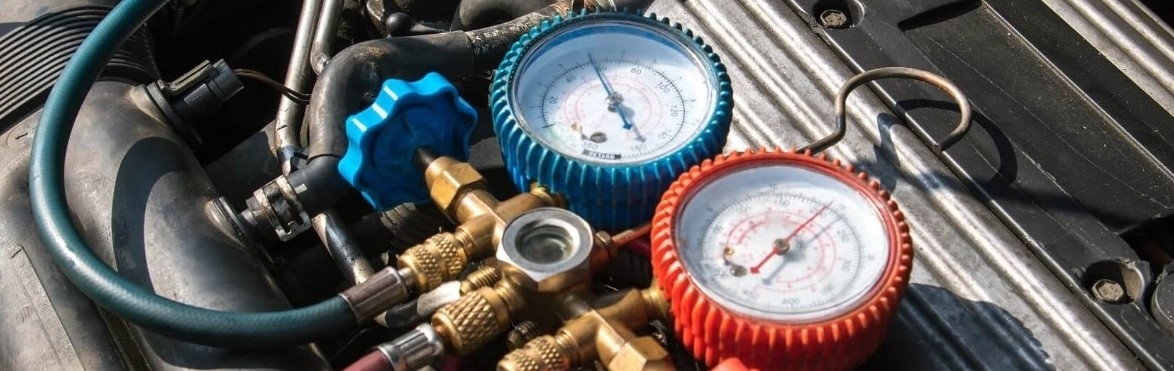
An air conditioning loop is filled to a precise weight of refrigerant at the factory, and it cools well only while the amount inside stays close to that mark. Too little leaves the evaporator running warm, while too much drives the pressures up until the system protects itself by cutting back. The AC team at Bravo Honda in Victoria, TX handles all makes and models and begins by finding out how much refrigerant is really in the loop and where any of it has gone. Gauges, a recovery scale and a close look at the fittings come before any part is named. The diagnosis tells you whether the fix is a seal, a valve or simply a correct, weighed fill.
The Job Behind Your Air Conditioning
Refrigerant is the one ingredient in the system measured by weight, not by how full the loop seems. The label under the hood lists the amount the loop was designed around, and the compressor, condenser and evaporator are all sized to move that exact quantity. Gauges alone cannot say how much is inside, because pressure readings shift with outside temperature and engine speed.
The expansion valve is the gatekeeper between the high side and the low side. It opens and closes a tiny passage to meter liquid refrigerant into the evaporator, letting in more while the core is warm and less as it cools. Because that passage is so small, anything that thickens or sticks inside the loop can hold the valve partly shut or partly open, and cooling suffers either way.
- Some vehicles use a fixed orifice tube in place of an expansion valve, a small screen and passage that cannot adjust but can clog just as easily.
- Rubber O-rings seal every joint where a line meets a component, and they harden with heat cycles until a joint starts to seep a little at a time.
- Each service port carries a small cap that acts as a second seal, so a missing cap leaves only the port valve itself holding refrigerant in.
- Compressor oil travels with the refrigerant, and an oily, dust-caked spot on a fitting often marks exactly where both are escaping.
- A receiver drier or accumulator holds a desiccant that soaks up stray moisture, and it can only absorb so much before it is spent.
Overfilling does as much harm as running low. Extra refrigerant has nowhere to go, so high-side pressure climbs, the compressor strains against it and the pressure switch may cut the compressor out to protect it. The vents can actually blow warmer on an overfilled loop than on one that is slightly short.
Store-bought refrigerant cans are often sold as a simple top-off, as though the system were a tire that just needs air. Those cans have no way of knowing how much is already in the loop, and many add a sealant meant to stop small leaks from the inside. The sealant cannot tell a pinhole from the narrow passage in the expansion valve or the screen of an orifice tube, so it can harden in the places the loop most needs open.
Time to Look at Your Air Conditioning
Clues to a fill problem show up at the gauges first, but drivers notice a few of them from the seat. Cooling that seems decent at a stoplight and weak once the car is moving, or the reverse, says something about the amount of refrigerant and how it is being metered.
Seeping leaks are slow by nature. A hardened O-ring, a line clamped against a bracket that wore through its coating or a service port missing its cap can lose a little refrigerant over many months, so cooling fades gradually and the driver adjusts without noticing. The owner then adds a can, the vents feel better for a while, and the seep carries on.
- Frost forming on the expansion valve or a line near the firewall, which can point to a restriction at the metering point.
- Vents that blow cold for a few minutes, turn mild, then return to cold as the compressor clicks off and back on.
- A compressor that sounds strained or labored soon after a can was added.
- A new hiss or gurgle from behind the dash that started after refrigerant was added at home.
Not every warm vent comes from what is inside the loop. A cooling fan that fails to run at idle can leave a correctly filled system unable to shed heat, and a blend door stuck partway mixes heater air into the stream. Measuring pressures next to vent temperature, while watching the fans run, keeps those faults from being treated with more refrigerant.
Each extra can adds to the work a technician has to undo later. Sealant spreads further with every cycle, and an overfilled loop keeps the compressor under strain on every hot afternoon. Having the system recovered and weighed while the only issue is a seeping O-ring keeps the repair to a seal and a correct fill.
Our AC Repair Options
Refrigerant work here comes in three parts, the fill, the valve and the seals, which is where a measured loop is won or lost.
Refrigerant Recovery and Weighed Refill
The technician connects a recovery machine, pulls the refrigerant out of the loop and reads the amount on its scale. Comparing that number with the label shows at once whether the system was short, overfilled or close to correct. The loop is then held under vacuum to boil off moisture and prove it seals, and the factory amount goes back in by weight. Vent temperature and both pressures are logged before and after so you can see the difference.
Sealant Detection and Expansion Valve Repair
Before the main recovery equipment is connected, a refrigerant identifier can test a sample for sealant and foreign gases. If sealant turns up, the technician explains which parts it has likely reached and what cleaning or replacement the loop needs. A gummed valve or orifice tube is replaced, and the receiver drier or accumulator is renewed with it so fresh desiccant protects the new parts. Where the service manual permits, the lines are flushed to carry loose sealant out.
O-Ring, Line and Service Port Sealing
Fittings, line joints and both service ports are checked with an electronic detector, and dye can be added where a seep is too small to find on the first pass. Hardened O-rings are replaced with the type rated for your system's refrigerant and oil. Missing or cracked port caps are replaced, and lines rubbing a bracket get a new clamp or a protective sleeve. The loop is then filled by weight and rechecked at every joint that was opened.
Our AC Repair Process, Step by Step
An AC visit opens with a short history covering when cooling first slipped, whether anyone has added refrigerant since and what product went in. The last answer matters most, because a can with sealant changes how the system is safely opened and which equipment can touch it.
One owner who drives Navarro Street every workday noticed the vents turning mild and added a couple of store cans over a few weekends. The air felt colder for a day or two, then worse than before, and a friend said the compressor was failing. On the gauges the high side read well above normal, and the recovery scale showed far more refrigerant than the label listed. The sample also tested positive for sealant, which had gathered at the expansion valve and held it nearly shut. A recovered loop, a new valve and drier, a flush and a weighed fill brought the cold air back, and the original compressor kept working.
- Where an identifier is available, a sample is tested before recovery so sealant or mixed gases are found first.
- The amount recovered is read on the scale and set beside the label amount, giving a clear answer about overfilling or a shortfall.
- Every joint, port cap and line clamp is checked for seepage while the loop is still under pressure.
- Each seal, valve or flush step gets its own line on the estimate, and nothing starts until you approve.
After repairs, the loop sits under deep vacuum long enough to show whether it holds, and only then is refrigerant added by weight. The technician runs the system with the doors closed, compares both pressures with the expected readings for the conditions and confirms the vent air is cold at idle and on a short drive.
An older pickup with a seeping port cap may need only an O-ring, a new cap and a weighed refill, and when the schedule and parts allow, that kind of job can be wrapped into a single stop. Loops holding sealant take longer because of the flush and valve work, and the advisor says so at check-in. The bays take all makes and models, small sedans and work trucks included.
Honda Know-How Behind Our AC Repair
Each Honda climate system is built around a specific refrigerant and compressor oil, which the factory-trained team at Bravo Honda services by Honda's own procedure. On a CR-V or an Accord, Honda service information lists the fill weight and the oil for that exact build, and the technician confirms both against your VIN before the gauges go on.
Honda diagnostic software can display the pressure sensor reading the climate system relies on, so the technician can compare it with the gauges. When an O-ring or valve is replaced, parts matched to your VIN keep the seal suited to the refrigerant and oil inside, since a universal can may carry an oil or additive the system was not built for.
- For owners who prefer factory parts, a genuine Honda expansion valve, O-ring kit or port cap can be ordered to fit the original lines.
- The amount of refrigerant recovered and the amount returned are both noted in your Honda service history.
- Published Honda service bulletins for AC lines and fittings on your model are checked as part of the diagnosis.
Find Bravo Honda in Victoria, TX
Surrounding Communities for AC Repair
Drivers who circle town on Loop 463 and those running errands up and down Navarro Street ask very different things of an AC, from steady highway cooling to constant stop-and-go cycling. From Inez out to Goliad, drivers turn to Bravo Honda once the vents stop keeping up.
- Inez, TX
- Telferner, TX
- Placedo, TX
- Bloomington, TX
- Nursery, TX
- McFaddin, TX
- Cuero, TX
- Goliad, TX
A refrigerant loop that holds its exact fill keeps cooling the same way for a long time, and a weighed service is how that fill gets restored.
Your Air Conditioning: Common Questions
Here are the AC questions owners ask once they suspect the refrigerant amount or a slow seep.
Q: Why did my AC get worse after I added refrigerant from a can?
Q: What does a service port cap actually do?
Q: Can an AC leak be too small to find?
Q: Is AC sealant ever a good idea?
Q: Will the weighed refrigerant service work on a car from another manufacturer?
When booking, note whether refrigerant was ever added at home and roughly when the cooling first slipped.
An old can or its label, if you kept it, is worth bringing along.
Save a Spot for AC Repair
A compressor working against excess refrigerant or a gummed valve wears faster with each drive. A weighed service booked now keeps the work centered on a seal or a valve while the compressor is still sound.
The scale reading, the pressures and any sealant result are shared before an estimate is approved. Each repair has its own line, and you decide what proceeds.
Booking with Bravo Honda takes a moment online or by phone, and the advisor will ask about any cans used at home. If the vents already blow warm, say so when you book so the visit is planned with enough time.
Service Specials

Wild Card

Tire Rotation & Balance
Properly balanced & rotated tires can improve tire life, gas mileage, ride comfort and uniform wear. Our Trained Technicians will balance, rotate and inflat
Read More

Heroes Appreciation
WE APPRECIATE OUR MILITARY, FIRST RESPONDERS, MEDICAL PERSONNEL, AND TEACHERS! As a thank you for your service, military personnel and first responders receive
Read More
Complimentary Battery Test
If needed. Plus Get a 100-Month Limited Warranty Included!

Cabin & Engine Air Filters
Tire Protection Package
Free 2 Year Road Hazard Protection + Roadside Assistance

Four Wheel Alignment
Alignments are crucial to ensuring that you get the longest life out of your tires.

Fall Service
Includes A/C service with cabin air filter replacement.