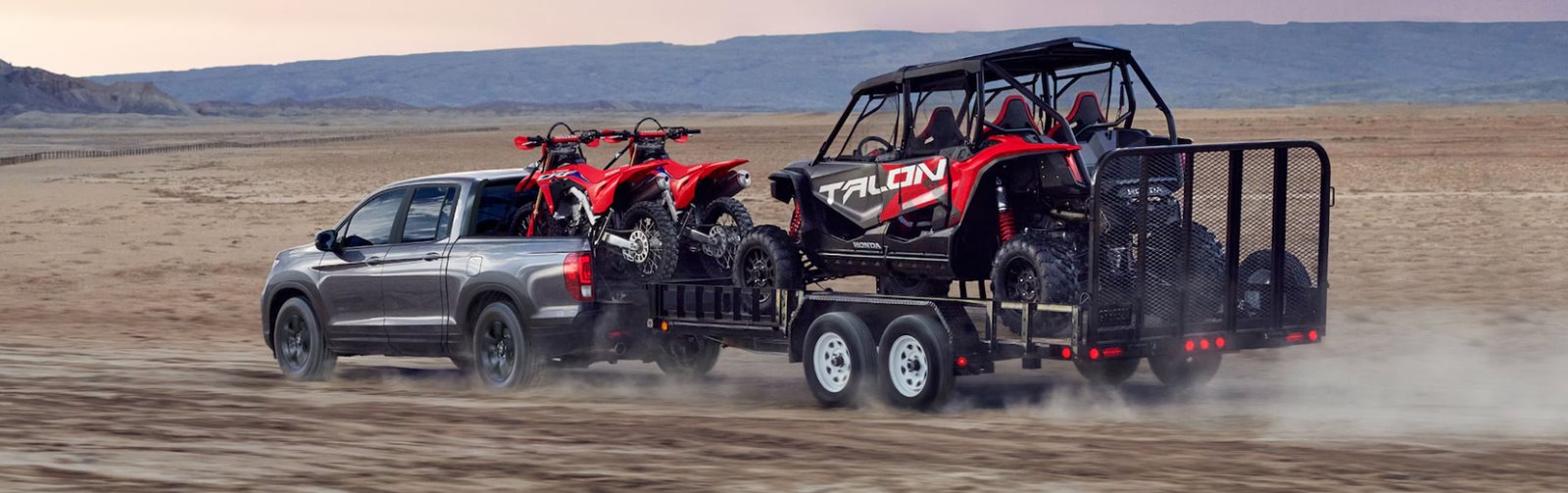
Planning a camping trip or hauling a boat this season around Victoria? Before you hitch anything to your Honda, it's essential to understand towing capacity. At Honda Victoria, we’re prepared to walk you through this, so your plans go off without a hitch. Continue reading this guide, and be sure to contact our team with any questions you have.
Start with Your Manufacturer's Towing Capacity
Every Honda vehicle, whether you drive a Ridgeline or a Pilot, comes with a manufacturer-specified maximum towing capacity, and this is always your starting point. You can find this figure in your Owner's Manual, on our dealership's vehicle spec sheets, or by asking one of our sales or service team members. This number represents the absolute maximum weight your vehicle is engineered to tow under ideal conditions.
Calculate Your Payload and Tongue Weight
Here's where many drivers go wrong. Towing capacity isn't just about the trailer's total weight — it's about what that trailer puts on your vehicle. Tongue weight is the downward force the trailer exerts on your hitch, and it should fall between 10% and 15% of the trailer's total loaded weight. So if you're towing a camper that weighs 5,000 lbs fully loaded, you want roughly 500–750 lbs of tongue weight. Too little and the trailer can sway; too much and your rear end sags, compromising steering and braking on Highway 87.
Factor in Your Gross Vehicle Weight Rating (GVWR)
Your Honda's GVWR, found on a sticker inside the driver's door jamb, is the maximum total weight the vehicle can safely carry, including passengers, cargo, fuel, and the vehicle itself. Subtract your vehicle's curb weight from the GVWR and you get your available payload capacity. That payload must cover your passengers, luggage, gear, and the tongue weight of your trailer. If you load up four adults, a roof box, and a heavy cooler before hooking up a camper to take to Victoria County Park, you may have already eaten into your available capacity significantly.
Do the Full Math Before You Hitch
Before any trip, run through the complete calculation. Start with your Honda's stated towing capacity, then weigh your trailer fully loaded with water, gear, food, bikes, and everything else. From there, calculate your tongue weight at 10–15% of that loaded trailer weight, then add it to the combined weight of your passengers and cargo. If that final number exceeds your payload capacity, you need to lighten the load or consider a different vehicle for the job. Skipping this step is one of the most common and most dangerous mistakes we see. Our knowledgeable team is ready to lend our help so you can figure out what’s possible
Don't Forget the Right Hitch and Brake Controller
Even a perfectly calculated tow can go wrong with the wrong equipment. Make sure your hitch class matches your towing needs — a Class III hitch is standard for most Honda SUVs and trucks. For trailers over 1,500 lbs, many states require a trailer brake controller, and we strongly recommend one regardless of local law. It dramatically reduces stopping distance and wear on your vehicle.
When in Doubt, Ask Us
Towing calculations can feel complicated, especially when you're shopping for a new trailer or camper. That's exactly why we encourage you to visit us before you buy. Bring the trailer specs, tell us how you plan to load your vehicle, and we'll help you confirm whether your Honda is the right match or whether it's time to look at an upgrade. Towing done right is towing done safely, and that's always our priority.